
Feb 5, 2026 • Adrian T
Mastering Microlearning: The Essential Tech Frameworks for Modern Training
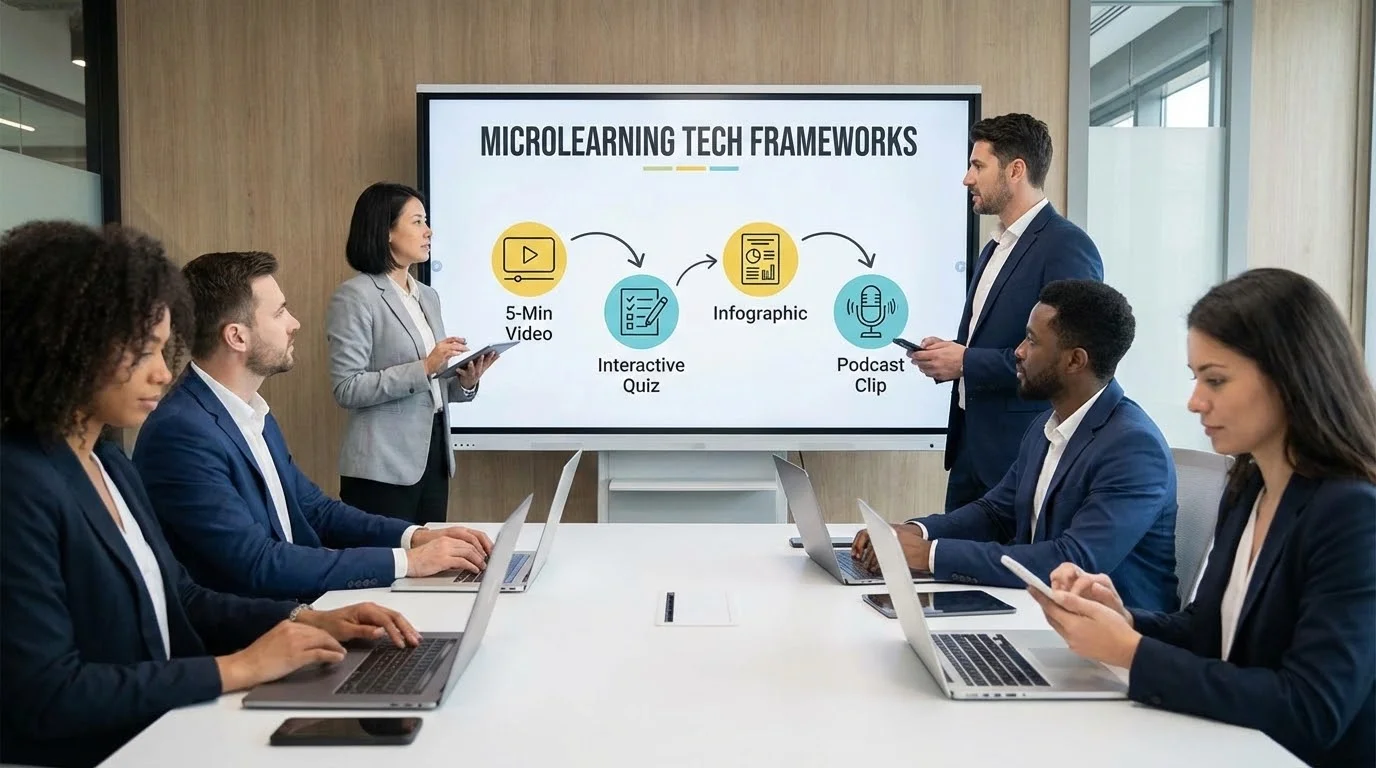
Mastering new technology takes patience and the right learning environment. Microlearning tech frameworks deliver educational content in bite-sized, easily digestible modules. This approach is highly effective for teaching digital literacy, as it prevents cognitive overload, encourages daily practice, and allows adult learners to quickly master complex software tools at their own pace. As organizations move away from traditional, bulky learning management systems, these agile frameworks provide the infrastructure necessary for continuous, on-demand skill acquisition. By leveraging mobile-first design and spaced repetition, these systems bridge the gap between information delivery and long-term retention.
Core Architectural Pillars of Microlearning Technology
Building an effective digital education platform requires a robust underlying structure. The implementation of mobile-first delivery systems ensures accessibility and cross-device compatibility for every user. Mobile-first design guarantees learners can access training materials on smartphones or tablets seamlessly. This flexibility allows individuals to integrate education into their daily routines without being tethered to a desktop computer. A responsive interface removes technical barriers for non-technical users accessing new information.
Addressing memory decay requires specific instructional mechanics tailored to adult cognition. Utilization of spaced repetition algorithms combats the Ebbinghaus forgetting curve by reintroducing concepts just as the learner is about to forget them. This systematic review process strengthens neural pathways and solidifies long-term recall for complex tasks. Educational technology platforms program these algorithms to track individual progress and adapt review schedules automatically. Targeted repetition helps adult learners retain multi-step processes for operating new digital government tools or generative AI applications.
Personalization forms the next critical element of this architecture. Granular content metadata strategies enable highly personalized and adaptive learning paths. By tagging each micro-module with specific skills, difficulty levels, and learning styles, the system can serve the most relevant content to the user. This data-driven approach prevents learners from wasting time on material they already know well. The platform dynamically adjusts to their proficiency level and accelerates their journey toward digital competence.
System integration ensures these educational tools fit into existing daily workflows effortlessly. An API-first architecture provides seamless integration with existing enterprise productivity suites. This connectivity allows learning modules to launch directly within the software applications users navigate daily. Employees and solopreneurs can access quick tutorials without leaving their primary digital workspaces. Embedded support reduces friction and promotes immediate application of new technical skills.
Delivery Modalities and Platform Evolution
The landscape of corporate and community education is undergoing a fundamental transformation. The shift from monolithic Learning Management Systems (LMS) to modular Learning Experience Platforms (LXP) reflects a growing demand for user-centric design. Legacy systems focus heavily on compliance tracking and administrative control. Modern platforms prioritize the learner experience by offering intuitive navigation and curated content feeds. This evolution mirrors the transition from rigid classroom lectures to flexible, self-directed exploration.
Here is a comparison of these two prominent delivery frameworks.
| Feature | Legacy Learning Management Systems (LMS) | Modern Learning Experience Platforms (LXP) |
|---|---|---|
| Core Focus | Administrative control and formal compliance tracking. | User experience and personalized content discovery. |
| Content Delivery | Long-form courses and linear progression models. | Bite-sized modules and adaptive, branched learning paths. |
| Accessibility | Desktop-centric and centralized portal access. | Mobile-first and integrated into daily workflows. |
| Engagement | Mandatory completion metrics and rigid testing. | AI-driven recommendations and interactive social learning. |
Engagement requires proactive communication strategies tailored to user habits. Integrating push-notifications and SMS-based triggers helps maintain consistent engagement across diverse user groups. These gentle reminders prompt learners to complete their daily five-minute modules promptly. Strategic timing of these alerts ensures training remains top of mind without becoming an annoyance. Regular nudges build strong educational habits for older adults mastering smartphone applications.
Interactive technologies provide real-time support during the learning process. The role of chatbot-driven reinforcement loops is critical in sustaining learner attention. Automated assistants can quiz users, answer basic questions, and provide immediate feedback on their progress. This conversational interface mimics human interaction and keeps learners actively participating in the material. Immediate clarification of confusing concepts prevents frustration and abandonment of the training program.
Motivation mechanics must be carefully calibrated to support educational goals effectively. Balancing gamification elements drives user motivation without inducing cognitive distraction. Badges, points, and leaderboards encourage healthy participation and reward consistent effort. Designers must ensure these game-like features do not overshadow the actual educational content. Well-executed gamification fosters a sense of achievement and community among learners tackling complex technological subjects.
The Expert Landscape: Redefining Digital Retention
Evaluating practical outcomes reveals a stark contrast between old and new instructional methods. Analysis of how Seniors engaging in 5-minute, scenario-based daily microlearning retain operational technology skills 80 percent better than those attending infrequent, multi-hour workshops, fundamentally disrupting traditional adult education models in the digital literacy space. A multi-hour lecture often overwhelms participants with excessive information. Short bursts of targeted practice allow older demographics to master generative AI tools and avoid digital scams effectively. This data-backed superiority proves that frequent, small interventions create lasting behavioral change.
The timing of education delivery dictates its practical usefulness. The critical transition from periodic training events to continuous in-the-flow-of-work learning models is necessary for modern skill acquisition. Learners face immediate challenges when navigating complex applications or executing unfamiliar digital tasks. Providing answers exactly when the problem arises ensures high relevance and immediate application. This continuous model transforms education from an isolated event into a permanent support structure.
Empirical evidence supports this shift in training methodology definitively. Statistical validation of high-frequency, low-duration learning solidifies it as the new standard for corporate upskilling. Companies tracking performance metrics note significant improvements in task execution speed and accuracy. Employees subjected to daily micro-lessons show a faster time-to-competency than those attending quarterly seminars. Frequent engagement builds deep familiarity with software tools and reduces reliance on IT support desks.
Practical exercises build confidence faster than theoretical instruction alone. Evaluating the impact of scenario-based simulations on immediate software competency highlights the power of experiential learning. Replicating the exact interface of a mobile banking app or a government portal gives users a safe sandbox for experimentation. Learners can make mistakes without fear of financial loss or data deletion. These realistic simulations translate directly to confident, independent usage in the real world.
Interoperability and Data Standards
A comprehensive educational framework must track progress across multiple digital environments. Adopting the Experience API (xAPI) captures learning data across diverse external environments. This technical integration allows platforms to track real-world application of skills beyond the enclosed digital learning environment. If a learner successfully uses a new software tool or completes a task in a separate application, the system registers this achievement. Tracking practical application provides a truer measure of competence than multiple-choice quizzes.
Updating infrastructure requires adopting current technological benchmarks for data exchange. Transitioning from legacy SCORM compliance to modern LTI (Learning Tools Interoperability) standards is essential for seamless connectivity. Older frameworks limit data collection to basic completion statuses and quiz scores. Modern standards facilitate secure, rich data exchanges between the learning platform and external applications. This interoperability ensures all educational tools communicate effectively and share comprehensive user progress profiles.
Global reach requires a robust technical foundation capable of handling immense traffic. The importance of cloud-native infrastructure is undeniable in achieving global scalability for training programs. Cloud hosting provides the elasticity needed to support thousands of concurrent users accessing video modules and interactive simulations. This architecture ensures high availability and fast load times regardless of the learner’s geographic location. A stable, responsive platform is vital for maintaining learner trust and preventing technical frustration.
Data security remains paramount in these interconnected educational ecosystems. Cloud-native solutions offer advanced encryption and strict compliance with international data protection regulations. Organizations can safely store granular performance metrics while protecting sensitive user identities. Maintaining strict data governance builds credibility and encourages widespread adoption among privacy-conscious demographics.
Specific Scenarios & Deep Dives
Applying microlearning frameworks to concrete challenges yields measurable improvements across various operational fronts. Structured implementation requires tailored approaches for different use cases to maximize retention and practical utility.
-
Employee Onboarding: Optimizing employee onboarding through sequence-based micro-tasking frameworks accelerates the integration of new hires. Instead of overwhelming new staff with dense manuals, organizations deliver localized information sequentially. Each micro-task introduces a specific company protocol or software tool required for their role. This structured approach builds competence gradually and reduces the stress associated with starting a new position.
-
Software Migration: Technological transitions often face fierce resistance from established workforces. Case studies on software migration training for non-technical demographics demonstrate the efficacy of bite-sized instruction. Providing short daily tutorials helps employees navigate new interfaces without experiencing major productivity dips. Targeted support ensures all team members can perform their duties confidently on upgraded platforms.
-
Compliance Training: Mandatory education requires strategic delivery to ensure high completion rates. Deploying compliance training via daily bite-sized prompts and feedback loops transforms a tedious requirement into an engaging routine. Short scenarios testing cybersecurity awareness keep critical policies fresh in the user’s mind. This steady drip of information significantly reduces the risk of compliance violations and security breaches.
-
Remote Work Development: Remote work environments demand self-directed educational solutions. Frameworks for continuous professional development in hybrid and remote work environments rely heavily on accessible, on-demand content. Solopreneurs and remote teams must independently update their skills in areas like generative AI and digital communication. Providing a robust library of micro-lessons empowers these professionals to upskill during brief gaps in their schedules.
Community organizations also leverage these specific frameworks for lasting social impact. Delivering practical tech education to underserved communities bridges the digital divide effectively. Empathy-led instruction paired with accessible mobile platforms ensures vulnerable populations remain connected and capable. Teaching older adults to navigate essential digital services fosters independence and promotes an active, engaging lifestyle.
Related Posts

Do Apps Like WhatsApp, Gmail Work in China? How Singapore Travellers Stay Connected

AI Generated Photos and Videos: Safety Tips and New Ideas to Try

Why More Singapore Seniors Are Joining Instagram (and How to Start)

How to Build a Design System for your Business and Brands Using Claude Design

Claude Plugins Explained: What They Are and How to Use Them for Business

Edit images using Google Gemini Nano Banana without photoshop

Leading Image, Video and Audio Generative AI Companies With Free Tiers and Usage

Leading Generative AI Companies Around the World With Free Tiers and Usage
