
Feb 14, 2026 • Adrian T
Guide to Fall Prevention and Safety for Elderly Adults at Home
A fall can change everything in an instant. For most people getting older, staying independent is the biggest goal. Falling is the single greatest threat to that goal. It isn't just an inevitable part of aging though. Most falls happen because of a mix of physical health and things in the house that can be fixed.
If you understand the risks and fix the environment, you can lower the odds of an accident. This guide looks at how to find hazards, which habits make the biggest difference, and how technology helps. These are practical ways to keep yourself or someone you love safe while living at home.
The Reality of Falls Among the Elderly: Risks and Consequences
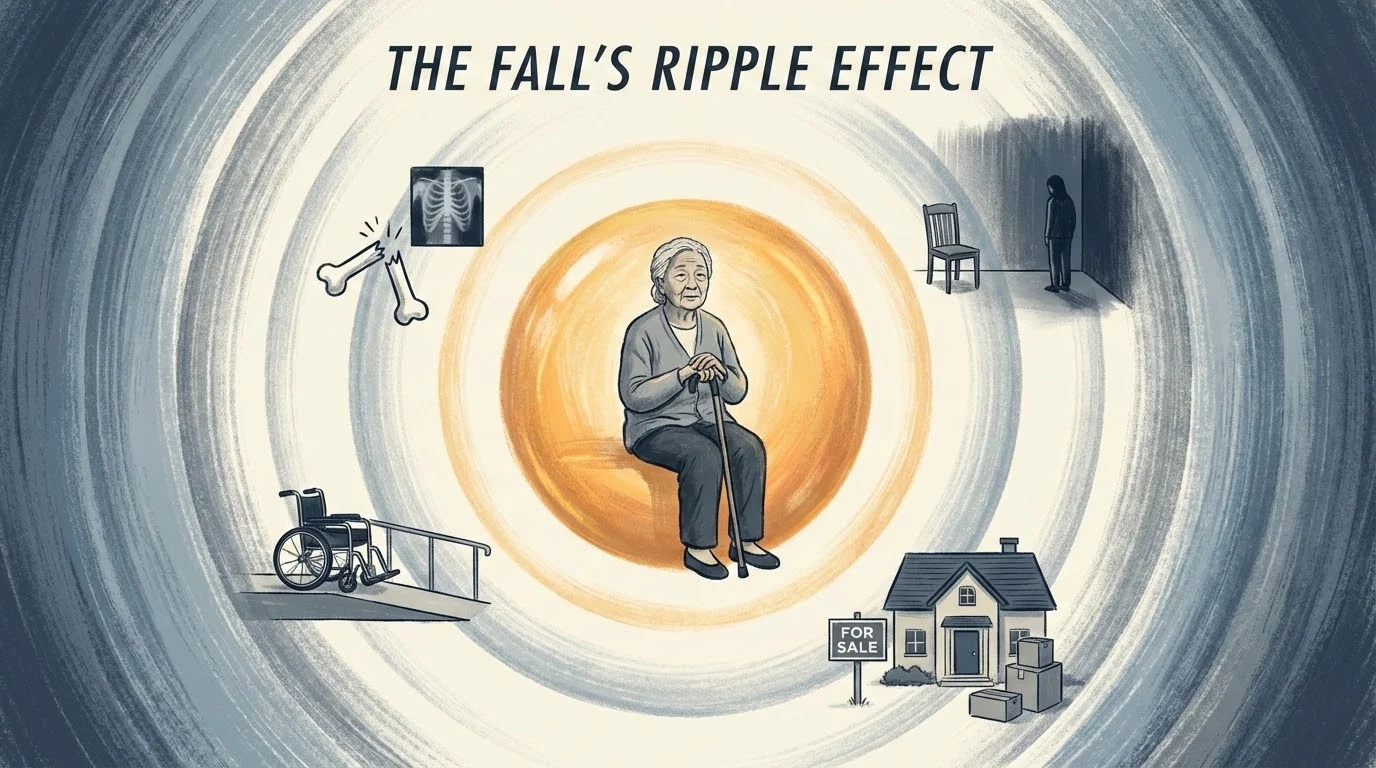
The numbers are high. One in three Singaporeans aged 65 and older falls every year. This is a major health issue. Even a small trip can lead to a broken hip or a head injury. The pain is one thing, but the fallout hits every part of a person's life.
The biggest problem is often the fear of falling again. After someone falls once, they get nervous about moving. They might stop walking to the mailbox or quit visiting friends.
This inactivity makes muscles weaker. It makes joints stiffer.
Ironically, losing that strength makes another fall even more likely. It's a hard cycle to break. There are also social costs. If you can't drive or walk easily, you end up isolated. Often, a bad fall is the main reason a senior has to move into assisted living.
Fall prevention is about more than avoiding bruises. It's about keeping your way of life.
Essential Home Safety for Senior Citizens: Room-by-Room Checklist
Most falls happen at home. Things a younger person doesn't even notice can be a major hurdle for someone with limited vision or mobility. Walking through each room is the first step to making things safer.
Optimizing the Living Room and Hallways
The living room is the heart of the home, but it's often full of traps. Throw rugs is the biggest problem. They look nice, but they're incredibly easy to trip over. The best move is to get rid of them. If you really want to keep them, use double-sided tape or a non-slip backing to stick them to the floor.
Clutter is another issue. Keep paths clear of books, shoes, and decor.
Check your furniture. A sofa that's too soft or too low is hard to get out of. Imagine trying to stand up from a low chair when your knees are stiff. You end up struggling and losing your balance. Choose firm chairs with armrests so you have leverage when you stand.
Lighting in hallways matters. Many falls happen at night on the way to the bathroom. Use motion-sensor lights that pop on automatically. Make sure light switches are at both ends of a long hall. Never run extension cords across a path. Tape them along the baseboards instead.
Kitchen Safety and Accessibility
In the kitchen, keep everything within reach. Reaching for a heavy pot on a high shelf or bending to the back of a low cabinet can make you dizzy. Move the things you use every day, like plates and glasses, to counter-level shelves.
If you use a step stool, make sure it has a handrail. Never use a kitchen chair as a ladder.
Spills are dangerous. Keep a mop or paper towels nearby to clean up liquids immediately. Tile and linoleum get very slick when they're wet. Put non-slip mats in front of the sink and the stove for extra grip.
Creating a Slip-Proof Bathroom Environment
Statistically, the bathroom is the most dangerous room in the house. Water, soap, and hard surfaces are a bad combination.
Standard tubs are hard to climb into. Replacing a tub with a walk-in shower is a great long-term fix. If you can't do that, get a high-quality shower chair.
The mat outside the tub needs a rubber backing. Many people just use a towel, but towels slide across the floor like a sled. Install a raised toilet seat if sitting down has become a chore. It shortens the distance you have to move and keeps you stable. Make sure the lighting is bright, especially near the shower entrance.
Lifestyle Modifications to Improve Safety for Older Adults
Fixing the house is only half of the job. How you live and take care of your body matters just as much. Small habit changes lead to much better balance.
The Role of Proper Footwear in Stability
Walking around the house in socks is a bad idea. They have no traction on wood or tile. Loose slippers are also risky because they can slide right off your heel and trip you up.
The best choice is a sturdy shoe with a rubber sole that doesn't slip. Look for laces or Velcro to keep the foot snug. Avoid high heels or very thick soles that make it hard to feel the floor. Even inside, a shoe with good support helps your balance.
Managing Medications to Reduce Dizziness
Many seniors take several medications. Sometimes these drugs interact and cause dizziness or sleepiness. Blood pressure pills, sedatives, and even some cold medicines can mess with your balance.
Ask a pharmacist or doctor to look at your meds once a year. They can spot the ones that make you unsteady. If you feel lightheaded when you stand up, tell your doctor. It might be a side effect. Usually, a small change in timing or dose fixes the problem.
Importance of Regular Vision and Hearing Checks
Your eyes and ears keep you upright. Vision changes make it hard to see a curb or a change in the floor. Conditions like cataracts happen slowly, so you might not notice the change. Get your eyes checked regularly.
If you wear bifocals, be careful on stairs. The bottom of the lens can make the steps look blurry or closer than they really are.
Hearing is just as important. The inner ear is what controls your balance. If you have an infection or hearing loss, your brain might get the wrong signals about your position. Using a hearing aid can actually help you stay balanced.
Top Fall Prevention Products for Seniors to Install Today
You don't need to remodel the whole house to make it safer. A few specific products provide immediate help.
Grab Bars and Safety Rails
Grab bars are a must. A common mistake is grabbing a towel rack when you slip. Towel racks aren't meant to hold a person's weight. They will pull right out of the wall.
Get professional-grade grab bars bolted into the wall studs. Put them in the shower and next to the toilet. You might also want one by the bed if getting up in the morning is a struggle. A sturdy handrail is also important for any entryway with even one or two steps.
Non-Slip Flooring and Lighting Enhancements
Wood or tile stairs are naturally slippery. You can buy clear adhesive strips that add grip without ruining the look of the wood. Use a strip of colored tape on the edge of each step to make them easier to see.
Lighting is easy to fix with plug-in LED nightlights. Pick the ones with sensors so they stay off during the day. For dark closets, stick battery-powered puck lights to the wall. This lets you see into corners without needing an electrician.
The Role of Technology: Fall Detection for Seniors
Technology has moved fast. There are now ways to monitor safety without being annoying. These systems give everyone peace of mind.
Wearable Medical Alert Systems
The medical alert button is the most common tool. You wear it as a pendant or a wristband. If you fall, you press the button to talk to an operator.
Many new versions have automatic fall detection. These use sensors to tell if you've actually fallen. If you're knocked out or too shaken to press the button, the device calls for help on its own. This is a life-saver for people living alone.
Smart Home Sensors and AI Monitoring
If you don't want to wear a device, smart home tech is an option. Sensors placed around the house can track movement. If the system sees that you've been in the bathroom for two hours or haven't moved at all, it can text a family member.
Voice assistants are helpful too. If you fall but can't reach a phone, you can yell for the assistant to call your daughter or emergency services. It's a great backup.
Building Strength: Fall Prevention Classes for Seniors
Fitness is your best defense. Even light exercise builds the muscles that keep you steady when you stumble.
Balance and Flexibility Exercises
Doctors often suggest Tai Chi for balance. It uses slow, controlled movements where you shift your weight from one leg to the other. This trains your brain and body to stay stable while you move. Yoga is also great for flexibility. If your muscles are flexible, you can recover faster if you lose your footing.
Low-Impact Strength Training
You don't have to lift heavy weights. Simple moves like sit-to-stands work well. Sit in a firm chair and stand up without using your arms. Do this a few times a day.
Strong legs act like shock absorbers. Many community centers or YMCAs have classes specifically for seniors. These are a safe place to work out and meet people at the same time.
Actionable Steps for Improving Elderly Safety at Home
Making a home safe can feel like a huge project. It's better to break it down. Start with a safety sweep today. Walk through the house and look for cords or rugs. Fix those first.
Next, make the appointments. Call the eye doctor. Ask your regular doctor for a balance test. They can watch you walk and see if there are any hidden issues.
Finally, talk to your family. Safety isn't about losing your freedom. It's about making sure that freedom lasts as long as possible.
Creating an Emergency Response Plan After a Fall
Accidents happen even with the best plan. Knowing what to do in the first few minutes can keep an injury from getting worse.
First, stay calm. Don't try to get up right away. Check for pain. If you feel a sharp pain in your hip or back, don't move. Use your alert button or a phone to call for help.
If you aren't hurt, crawl to a sturdy piece of furniture like a couch. Put your hands on the seat and get into a kneeling position. Slowly bring one leg forward and put your foot flat on the floor. Use your arms and legs to push yourself up into a sitting position on the couch.
Keep a phone in every room at a height where you can reach it from the floor. You don't want to be stranded.
Final Thoughts on Enhancing the Safety of Elderly Loved Ones
Preventing falls is an ongoing job. It takes a mix of fixing the house, managing health, and staying active. By taking these steps, you create a home that supports a busy life.
Safety isn't a one-time fix. It means staying aware of health changes and adapting to the house as things move along. The work you do today is an investment in staying independent for years to come. Small changes really do lead to big results. Pick one room or one habit and start there.
FAQ
What are the most common causes of falls among the elderly?
Falls usually happen because of a mix of things. Muscle weakness and poor vision are big factors. Side effects from medicine, like feeling dizzy, also cause problems. In the house, things like loose rugs and bad lighting are the most common trip hazards.
How can I perform a senior citizen home safety audit?
Walk through every room. Look at things from a senior's point of view. Are the floors slippery? Are the stairs sturdy? Is it bright enough to see the floor clearly? Use a checklist to make sure you don't miss things like grab bars or messy power cords.
Are fall prevention classes for seniors covered by insurance?
Many Medicare Advantage plans and private insurance help pay for these programs. Local classes like Tai Chi are often cheap or even free at senior centers. Check with your provider to see what they cover.
What is the best fall detection system for seniors living alone?
It depends on what you're comfortable with. Pendants with automatic detection are great if you might forget to push a button. If you don't like wearing something, voice-activated hubs or wall sensors are a good alternative for calling for help.
How often should elderly safety at home be reassessed?
Check the home at least once a year. You should also check it after any health change or a new medication. If there's a near-miss where someone almost tripped, do an audit right away. The home needs to change as your physical needs change.
Related Posts

AI Generated Photos and Videos: Safety Tips and New Ideas to Try

Why More Singapore Seniors Are Joining Instagram (and How to Start)

How to Build a Design System for your Business and Brands Using Claude Design

Claude Plugins Explained: What They Are and How to Use Them for Business

Edit images using Google Gemini Nano Banana without photoshop

Leading Image, Video and Audio Generative AI Companies With Free Tiers and Usage

Leading Generative AI Companies Around the World With Free Tiers and Usage

Deepfake Technology Explained: How It Works, Risks, and the Future of AI
