
Feb 16, 2026 • Adrian T
Understanding the Growing Elderly Population in Singapore: Trends, Stats, and 2025/2026 Support
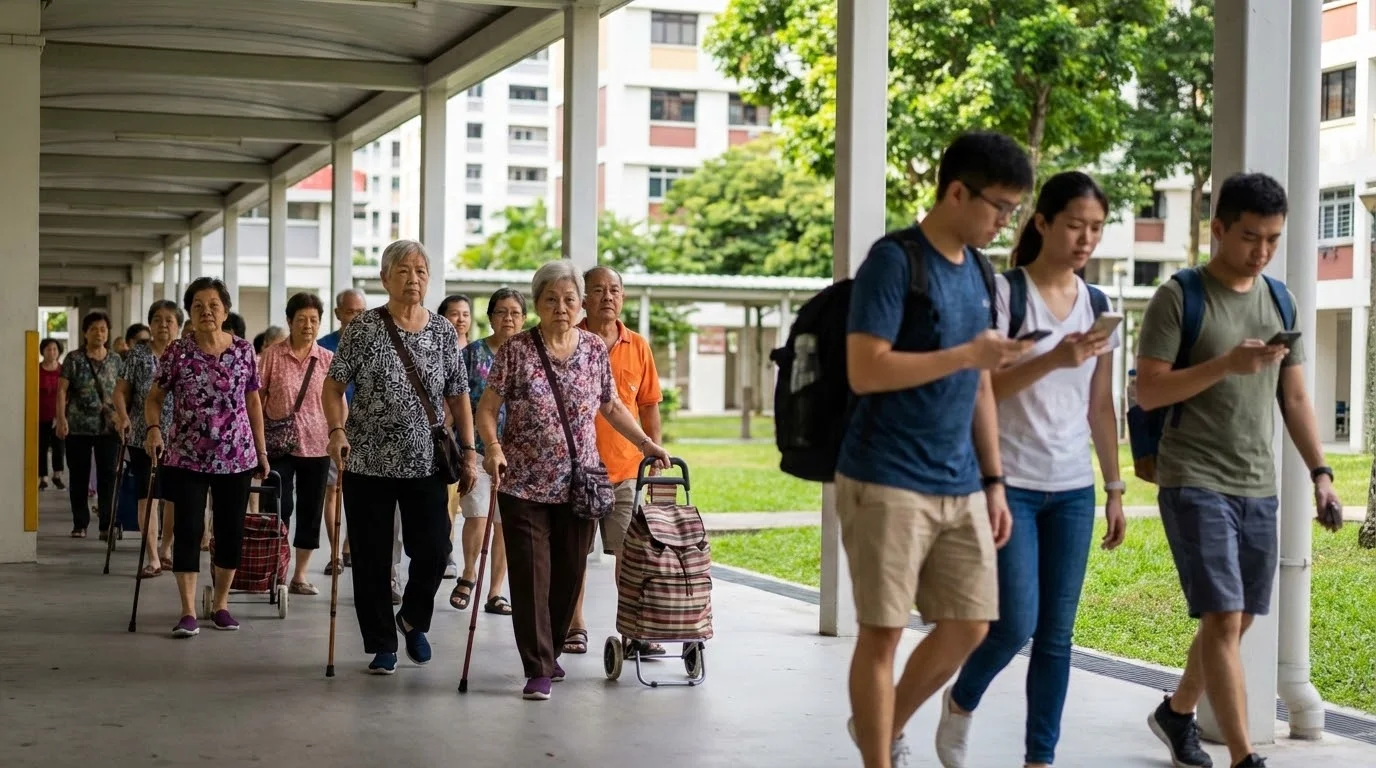
Singapore is changing fast. While the skyline gets new glass towers and fancy malls, the real shift is happening on the ground. The number of seniors is growing at a speed few other countries have ever seen. This isn't just a boring statistic for researchers to study. It changes how the government builds flats, how families plan their budgets, and how hospitals run.
By 2030, one in every four Singaporeans will be 65 or older.
We are becoming a super aged society. This brings a mix of difficult hurdles and new ways of doing things. If you live here, you need to know what's coming. We'll look at the latest numbers, why this is happening, and the help coming in 2025 and 2026.
Current Statistics: The Elderly Population in Singapore Today
The data is clear. Singapore is one of the fastest aging places on earth. In 2024, nearly 20 percent of residents are 65 or older. Compare that to ten years ago when it was only 11 percent.
The speed is the shocking part.
Most European countries took decades or even a century to age like this. Singapore is doing it in a fraction of that time.
Analyzing the Percentage of Seniors in the Total Population
The elderly are no longer a small group. This silver wave is changing every neighborhood. Walk through Queensway, Bukit Merah, or Toa Payoh and you'll see it immediately. These older estates are usually the first to get new ramps and senior gyms because the need is so high.
The government looks at two different groups. The young old are those between 65 and 74. They're often still quite active. Some still work. Then there are the old seniors, aged 75 and up. This group often needs more help with health and daily tasks.
Right now, the number of people in that 75 plus group is growing the fastest. This puts a lot of pressure on nursing homes and home care services.
Gender Distribution and Life Expectancy Trends
Gender matters a lot here. Women in Singapore generally live longer than men. A woman can expect to live to about 86, while a man lives to about 81. This means many seniors living alone in their later years are women.
It's a success for our doctors and nurses. We have low infant mortality and we're good at managing heart disease. But living longer isn't the same as living well.
Health adjusted life expectancy is the new goal. It's about making sure those extra years are spent enjoying life, not stuck in a hospital bed.
Why the Singapore Elderly Population is Growing Rapidly
It's a two sided issue. People are living a long time, and we aren't having enough babies to balance things out.
Impact of Declining Birth Rates
Singapore has had low birth rates for a long time. In 2025, the total fertility rate hit a record low of 0.87. You need a rate of 2.1 just to keep the population steady.
When fewer babies are born, the base of the population shrinks. Eventually, the whole structure flips over. You end up with a huge group of seniors supported by a tiny group of working adults.
Right now, there are about four workers for every senior. By 2030, that will drop to two. This forces the government to find new ways to pay for social services.
Advancements in Healthcare and Longevity
The second reason is that our healthcare is excellent. Singapore is always near the top of world health rankings. Clean water, good vaccines, and modern hospitals have stopped many causes of early death.
Preventive care is also a big deal. Regular checkups for blood pressure and sugar help people catch problems early. Because of this, more people are reaching 80 or 90 than ever before.
Even the number of people hitting 100 is rising. It used to be rare to see a centenarian, but now they're a growing part of the community.
The 2025 Seniors Support Package: A Lifeline for the Silver Generation
The government knows the financial pressure seniors feel. For 2025, several big programs are starting to provide a safety net. These are meant to give people peace of mind about their bills.
Enhancements to the Majulah Package
The Majulah Package is a major move. It's aimed at young seniors in their 50s and early 60s. The idea is to help them beef up their retirement savings before they actually stop working.
It includes a few parts. There is an Earn and Save Bonus. This puts extra money into the CPF accounts of seniors who keep working, as long as they don't earn too much. There is also a Retirement Savings Bonus for those with lower CPF balances.
In 2025, these bonuses will help thousands of people fill the gaps in their savings. It rewards people for staying active in the workforce.
Assistance for the 'Young-Old' and 'Old-Old' Segments
Needs change as you get older. The 2025 measures recognize this. For the younger group, the focus is on jobs and staying healthy. Companies get grants for hiring older workers, and there is money for seniors to learn digital skills.
For the older group, it's about care. Subsidies for CareShield Life and the Home Caregiving Grant are getting a boost.
Think about a family looking after a grandmother with dementia. This grant helps pay for a professional caregiver or a helper. The government is also adding more spots in nursing homes and day care centers so the most vulnerable have a place to go.
Singapore 2025 Elderly Cash Payouts: A Detailed Breakdown
Cash is a huge worry for retirees. To help with the cost of living and GST, the government has set up several payouts for 2025.
Eligibility Criteria for Cash Assistance
Most of the time, the government looks at two things: how much you earn and the value of your home. This targets the money toward people who need it most.
In 2025, seniors in HDB flats or smaller private homes will get the most help. The GST Voucher is a big part of this. To get it, you must be a citizen and meet the income rules.
There are also Medisave top ups. These depend on your age. Usually, the older you are, the more you get.
Projected Payout Timelines and Distribution Methods
Expect most cash payouts in August 2025. This is the usual schedule. The money goes straight into bank accounts through PayNow or Singpass. It's much faster than the old way of sending checks in the mail.
If someone isn't good with technology, they can go to a Gov Assist counter at a Community Club. Staff there can help them check what they're entitled to.
Don't forget the Medisave bonuses in December. You can't withdraw them as cash, but they are vital for paying insurance premiums.
Community and Healthcare Infrastructure for Seniors
Support isn't just about cash. It's about where you live. Singapore is physically changing to be more senior friendly.
Age-Well SG: Enhancing Neighborhoods for Senior Living
Age-Well SG is a plan to help people grow old in their own homes. We call this aging in place. The government is spending a lot to upgrade HDB estates.
You'll see more rest spots, better street lights, and Silver Zones where cars have to slow down.
Inside the house, the EASE program helps with renovations. You can get grab bars in the toilet, non slip floors, and ramps. These small things stop falls.
Imagine a senior living alone who slips in the bathroom. That one fall can lead to months in the hospital. These upgrades prevent that.
Expansion of Active Ageing Centres (AACs)
By 2025, the number of Active Ageing Centres will grow from 119 to 220. These places are the heart of the neighborhood. They aren't just for playing games. They have exercise classes and health screenings.
The staff at these centers are proactive. They check on seniors living nearby. If they find someone who is lonely or never leaves the house, they set up buddy programs. Social contact is one of the best ways to slow down dementia.
Financial Security: CPF and Retirement Planning in an Aging Society
CPF is still the foundation of retirement here. But because people live so long, there's a risk they might run out of money. That's why we have CPF LIFE.
It works like an annuity. You get a monthly payout for as long as you live. It doesn't matter if you live to 100. For seniors, this provides a level of safety that a regular savings account can't match.
The government also makes it easy for children to top up their parents' CPF. You get tax breaks for doing it. It's a way for the sandwich generation to look after their parents while still saving for themselves.
Technological Adoption Among Singapore Seniors
Some people think seniors are afraid of technology. That's not really true anymore. The push to be a Smart Nation includes everyone.
Many seniors use the HealthHub app to see their doctor appointments. They use Singpass for everything. During the pandemic, everyone had to learn, and those habits stayed.
Smartphone and computer courses by XIOHOO help a lot. It keeps them connected to the rest of the country.
Future Outlook: Transitioning to a Super-Aged Society by 2030
The year 2030 isn't far away. Very soon, more than 21 percent of our people will be 65 or older.
This means we have to rethink work. We will probably see more people in their 70s working part-time or acting as consultants. Offices will need to change with better chairs and flexible hours.
Healthcare will move out of big hospitals and into the heart of the community. We'll see more Community Care Apartments that have care services built right into the building.
The goal is to keep people out of the hospital unless it's an emergency. It's the only way to keep the system running.
Conclusion: Navigating the Challenges and Opportunities of an Aging Nation
Aging in Singapore is a reality we can't avoid. It's actually a sign of success. It means our people are living long, healthy lives.
Between the Majulah Package, the new senior friendly flats, and the Active Ageing Centres, the government is building a solid foundation. The cash payouts in 2025 help with the immediate bills, while community work tackles loneliness.
But money isn't everything. We need to change how we think about getting older. We shouldn't see aging as a problem to be solved.
Seniors are a resource. They have decades of experience and wisdom. A society that respects its elders is a healthy one. As 2030 gets closer, the focus is on making sure every senior can live with dignity and purpose.
FAQ
What is the projected size of the elderly population in Singapore by 2030?
By 2030, about 1 in 4 Singaporeans will be 65 or older. That's roughly 900,000 people. This will make Singapore a super aged society.
Who is eligible for the Singapore 2025 elderly cash payouts?
Generally, you must be a citizen aged 65 or up. The amount you get depends on the annual value of your home and your income. Most of the money goes to those in HDB flats with lower incomes.
What is included in the Singapore seniors support package for 2025?
It includes the Majulah Package bonuses, GST Vouchers, and Medisave top ups. It also covers help for home upgrades through the EASE program and new community health initiatives.
How does the Singapore government support aging in place?
They use the Age-Well SG program to make neighborhoods safer. They also offer the EASE program, which pays for things like grab bars and ramps in your home. Active Ageing Centres also provide support right in the neighborhood.
Are there specific subsidies for low-income seniors in Singapore?
Yes. Lower income seniors get more cash from GST Vouchers and bigger Medisave top ups. They can also get quarterly cash through the Silver Support Scheme. There is extra help for medical bills through MediFund if they can't afford their treatment.
Related Posts

Do Apps Like WhatsApp, Gmail Work in China? How Singapore Travellers Stay Connected

AI Generated Photos and Videos: Safety Tips and New Ideas to Try

Why More Singapore Seniors Are Joining Instagram (and How to Start)

How to Build a Design System for your Business and Brands Using Claude Design

Claude Plugins Explained: What They Are and How to Use Them for Business

Edit images using Google Gemini Nano Banana without photoshop

Leading Image, Video and Audio Generative AI Companies With Free Tiers and Usage

Leading Generative AI Companies Around the World With Free Tiers and Usage
